Categories
Excerpts Tax

Tax Googly on Unlisted Scrips

Private equity funds and holders of stock options were thrown into confusion by a Budget provision aimed at plugging a black money loophole, fearing that it could land them with a hefty tax bill. Those who acquired shares in unlisted companies after October 1, 2004, will have to pay 10% longterm capital gains tax if they hadn’t paid securities transaction tax (STT) at the time of purchase.

Currently, income arising from the transfer of long-term capital assets such as stocks is exempted from tax if the sale took place on or after October 1, 2004. STT, which was introduced that year, typically applies to listed stocks.

Revenue secretary Hasmukh Adhia sought to allay concerns regarding the measure. “We will come out with detailed rules to exclude genuine investments such as those made through initial public offer, foreign direct investment, Esops (employee stock options),” he said. The measures were aimed at preventing evasion of capital gains via investment in bogus companies. Pending the clarification, there is trepidation that a potent incentive that has helped fuel India’s startup economy could be undermine ..

“An unintended consequence of this rule is to potentially place an onerous tax burden on Esops — which represent the most powerful wealth-creation instrument that cash-strapped startups use to motivate employees,” said Gopal Srinivasan, chairman of the India Venture Capital Association (IVCA).

Punit Shah, partner, Dhruva Advisors, said the new rules will apply to all domestic investors, including promoters of unlisted Indian firms. “They would acquire shares either by subscription or in the form of any group restructuring and would not pay STT at the time of acquisition. But now they may have to pay long-term capital gains tax on exit even after listing of such shares,” he said.

Another announcement, hidden in the fine print, is the aim to collect more tax if shares of an unlisted company are sold below fair value. This may impact private equity investors who often sell stocks of closely held companies to other financial investors. For instance, if a share purchased at Rs 100 is sold for Rs 150, the 20% tax on longterm capital gains would be Rs 10 a share. But not if the taxman thinks that the fair value of the share is higher than Rs 150 — say, Rs 170. Here, the tax would be 20% on Rs 70 (and not Rs 50), thus raising the tax outgo to Rs 14 (instead of Rs 10) a share. –from ET
Categories
Links

Linkfest: February 02,2017

Some stuff I am reading today morning:

Highlights of Union Budget 2017 (ET)

4 Takeaways from the Budget for the Householder (Mint)

Thoughts on “Fudget 2017” (Bala)

What I liked in the budget (Subramoney)

How I looked stupid (Subramoney)

Why Silicon Valley’s young elite won’t invest in art (Bloomberg)

Everything I learned about investing I learned while crying (Altucher)

How Wall Streeters feel right now (TRB)

The other side of Uncorelated (Pension Partners)

Peril in the Casino (DR)

Categories
Investor Wisdom

Investor Wisdom Q3 FY2016-17 is Out !!

The latest issue of Investor Wisdom Newsletter for Q3 FY2016-17 has been dispatched to subscribers by email.

Subscribers kindly check your inboxes to ensure you have received the same.

Categories
Links

Linkfest: 01 February,2017

Some stuff I am reading today morning:

Economic Survey: Future bright if polity bites the bullet (Mint)

Download: Full Economic Survey 2017 (BS)

India’s ‘Make Or Break’ Budget (Bloomberg)

US based Indian professionals in panic mode (ET)

What H1B visa reforms mean for Indian IT (Mint)

Modi puts 18L people under the IT scanner (FE)

Insider Trading at Idea Cellular? (Gaurav)

Stock Markets & the Rule of Law (TRB)

The Chinese Credit Bubble (DR)

What chance you have of beating the markets? (Irrelevant Investor)

Categories
SponsoredPosts

The New Generation Of Traders


(Disclosure:This post has been sponsored by VBA Finance)

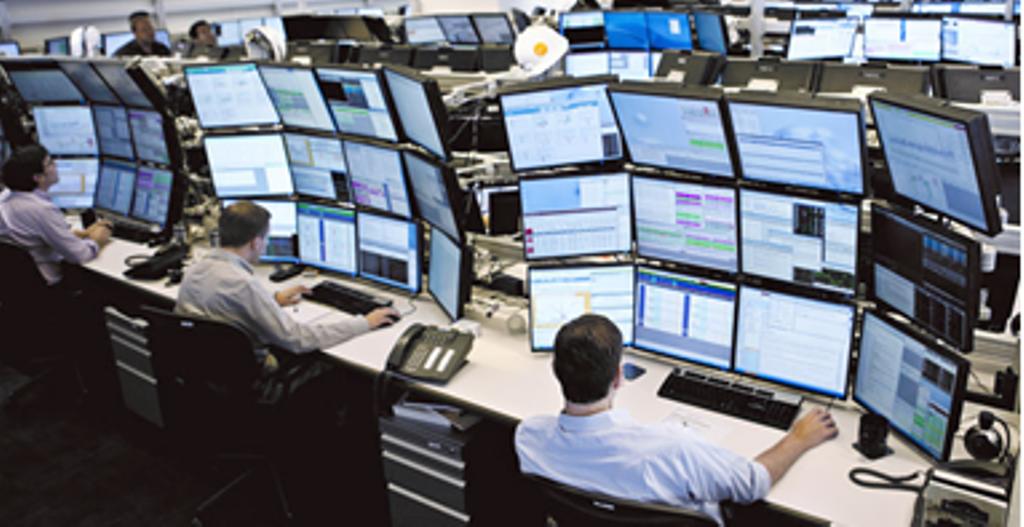
Before the introduction of technology,  getting a job in financial markets required absolutely no technical knowledge. At that time, operations of all kinds and any analytical task were done manually.

However, entering my first trading job made me realized that the technological revolution has brought us to a new era where the challenge now is to automate processes as much as possible, this with the help of computers.

The new generation of traders, which I used to belong, is now competing with more and more talented and skilled candidates that want to join this very lucrative industry. Traders that don’t know how to code still operate, but they belong to the old generation, and will not last for long.

When I joined Goldman Sachs for a trading position, I had to learn Excel VBA , which is the programming language embedded into Microsoft Excel. This is something I was not aware of, but VBA is a tool that traders and front office employees commonly use to develop automated programs in order to analyze, format and present raw financial data or even to develop charts.These automated tasks can range from extracting and formatting data from Bloomberg to creating a pricing tool for a particular product.

With VBA, an automated process of these kinds can be implemented in a few hours. Some other language can be better at the job, but it will require more resources and more time.

The beauty of VBA is that it can be used not only in Excel but in most of Microsoft applications such as Microsoft Access, Word and Powerpoint. Any computer that has one of these software can run VBA.

There are several options to get a trading position, the most common path is to come from an Ivy league school, which I feel blessed to have attend.

But that was seven years ago, and trends have changed. Just keep in mind that with the constant need of technical people in banks , you might be able to go to the top if you have the right technical skills, regardless of your academic background.